Dress for the Slip: What Actually Survives a Three-Hour Funk Set
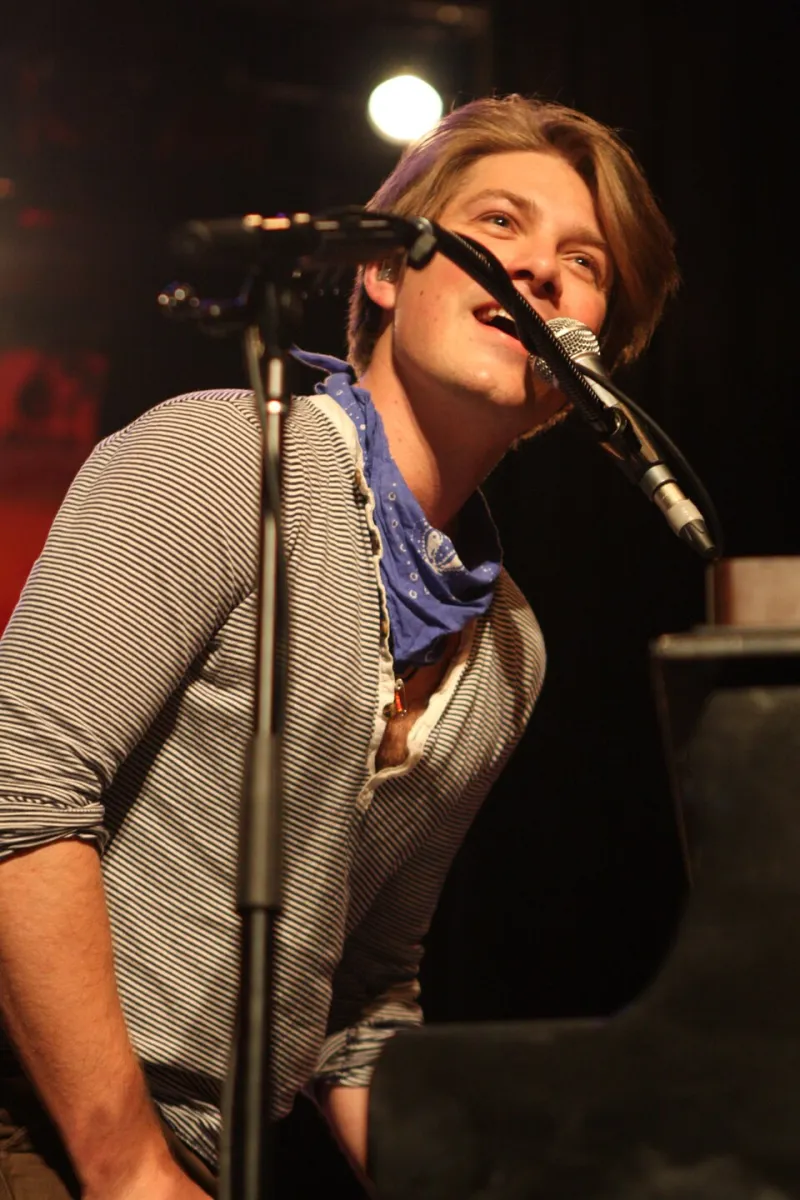
Photo: Eva Rinaldi, CC BY-SA 2.0, via Wikimedia Commons
Let's settle something once and for all: in funk, what you wear is part of the music. A three-hour set at club temperature with 400 dancing bodies will destroy the unprepared. We've played rooms where the stage felt like a sauna in August and the front row looked like they'd jumped in a pool fully clothed. This list is hard-earned knowledge. Treat it accordingly.
1. The Polyester Suit (Stains Worn With Pride)
Purists will tell you polyester doesn't breathe. Correct. That's the point. A good vintage-cut polyester suit doesn't absorb sweat — it repels it, which means you come off stage looking like you just started the set instead of finishing it. Yes, it's hot. Yes, you'll feel like a rotisserie chicken by the second encore. But the silhouette holds, the shine catches the lights, and the pit stains you earn become a badge of honor. Polyester suits don't stain — they collect receipts.
2. Moisture-Wicking Undershirt (The Unsung Hero)
Nobody sees it, everybody needs it. A quality merino or performance-blend undershirt pulls sweat off your skin so your outer layer can do its job. This is the least glamorous item on the list and arguably the most important. Horn players, organists trapped under stage lights, drummers — this one's for you.
3. Leather-Soled Dress Shoes (Calculated Risk)
Here's the great contradiction of funk stagecraft: you need grip to play, but you need slip to dance. Leather soles give you the slide — that gliding step across the stage during a breakdown — at the cost of occasionally nearly dying during a fast tempo change. Veterans learn to scuff the soles just enough. Rookies learn the hard way, usually during a guitar solo they didn't expect.
4. Rubber-Soled Sneakers (For the Working Class Groove)
If your show involves more footwork than fashion — think James Brown-level choreography — rubber soles are the safer bet. You sacrifice the slide but gain the ability to stop on a dime mid-spin. Bonus: your ankles will thank you on the concrete floors of American club basements from Chicago to Brooklyn.
5. Wide-Leg Trousers (Airflow Is Everything)
Skinny jeans at a funk show are a hate crime against your own legs. Wide-leg or flared pants let air move, which means sweat evaporates instead of pooling. There's a reason the classic funk silhouette never went slim. Physics was on their side.
6. The Silk Scarf (Utility Disguised as Flair)
Worn around the neck, it's style. Draped over a mic stand, it's a sweat towel. Tied to a wrist, it's a prop for the tambourine feature. The silk scarf is the multi-tool of funk wardrobe and we will not be taking questions.
7. Velour Everything (For Outdoor Festivals Only)
Velour in a club is a sauna experience you did not consent to. Velour at an outdoor festival in October, when the sun drops and the evening air cools? Chef's kiss. It holds warmth, moves beautifully, and photographs like a dream. Know your venue. Know your season.
8. What NOT to Wear: Anything You Love
This is the real rule underneath all the others. Every band has a story about the shirt, the hat, the jacket that got destroyed by one legendary night — soaked through, stepped on, stained with a mystery liquid from the front row. Testimonials from our own camp include a rhinestone shirt lost to a Philadelphia basement show and a white jumpsuit that never recovered from a New Orleans second-line afterparty. If you can't bear to lose it, leave it home.
The Bottom Line
Dress for the slip, not the selfie. Your clothes should move when you move, breathe when you can't, and wear the damage of a great night like a medal. The audience came to see a band that means it. Look like you mean it — and accept the stains.