First Thirty Minutes Are Holy: How to Book a Funk Opener That Sets the Room on Fire
Every funk band has a list. It lives in a shared note, a group text, or the back of a setlist from three tours ago: names of local horn sections, garage soul crews, and DJs who know exactly which 45s make a room loosen its collar. The list is not glamorous. It does not get posted on the artist page. But when a show is being built, that list might be the most important document in the band’s inbox.
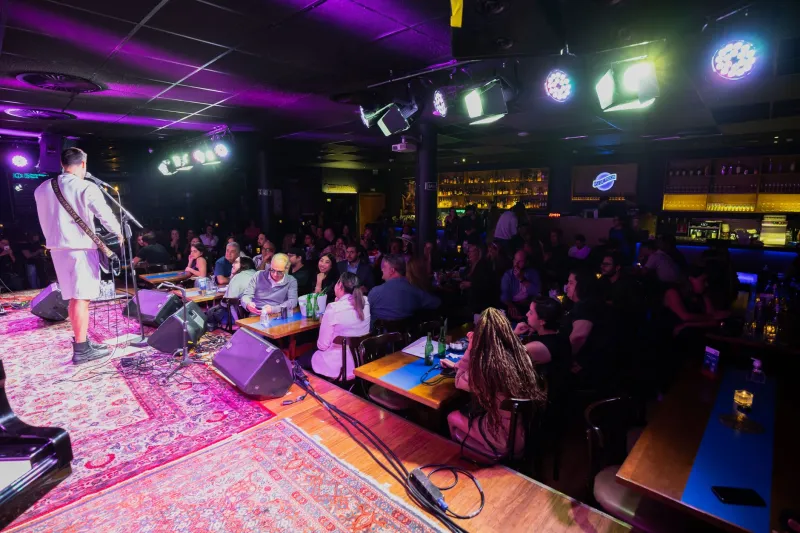
The opener is not a countdown timer. The opener is the first hand on the stove. If the room is still cold at 9:15, you can spend the rest of the night trying to thaw it out, and funk does not thrive in a cold room. The first thirty minutes are sacred ground. Book them like it.
The Opener Is Not a Countdown Timer
There is a lazy way to book a warm-up act: find whoever will play for gas money, hand them a thirty-minute slot, and hope the crowd drifts in during their last song. That approach treats the opening set like a parking lot—just something you pass through on the way to the real thing. It rarely works.
A funk night has a specific kind of physics. People need permission to move. They need to hear a groove that makes them stop checking their phone and start checking the floor for traction. The opener’s job is to establish that permission. They are not there to compete with the headliner. They are there to make the headliner’s job easier by getting the room ready to receive the grease.
The best openers understand this instinctively. They play to the room, not to the clock. They might start with a mid-tempo groove instead of a barnburner, let the horns ease in, and save the big vocal moment for song three. By the time the headliner walks on, the crowd is already in the pocket. That is not an accident. That is craft.
Three Kinds of Warm-Up Acts That Actually Work
Local horn sections
A horn section from the neighborhood can be a beautiful thing. They know the room. They know the sound guy. They know which songs make the local crowd holler. More importantly, they bring a physical presence that says this is a live music night, not a playlist with a cover charge.
A good horn section can stretch a three-piece rhythm section into something bigger than the sum of its parts. They can play a short set of instrumentals, back a local vocalist, or sit in with the headliner later. The smart booker looks for sections that have their own identity—not just a pickup crew with charts and good intentions. You want players who have logged hours together, who can lock into a groove without a lot of chatter between songs.
Garage soul crews
Garage soul is the opener’s opener. These are bands that might have one great singer, a beat-up organ, a drummer who hits like a rented truck, and a handful of originals that sound like they were recorded in a basement with the windows open. They are not polished. They do not need to be. What they need is a pulse.
A garage soul crew can warm up a room because they play with a kind of urgency that polished acts sometimes lose. They are still hungry. They still think every show might be the one that changes things. That energy is contagious. Put them in front of a crowd that is not quite sure if it wants to dance yet, and they will usually answer the question for them.
The key is to find crews that are tight enough to hold a groove and loose enough to be fun. You do not want a band that falls apart between songs or treats the set like a rehearsal. You want the scrappy, road-tested version—the one that has played enough bad Tuesday nights to know how to turn a good Friday into something better.
DJs with the right 45s
A DJ can be a perfect opener if they understand the assignment. The wrong DJ will treat the slot like a personal listening session, playing deep cuts while the room is still trying to find the bar. The right DJ will treat it like a conversation with the crowd. They will start with something familiar enough to catch attention, then slowly tighten the screws until people are moving without realizing they started.
A good funk DJ knows that the opening set is not about showing off the rarest record in the crate. It is about building a bridge. They might move from a mid-tempo soul shuffle into a breakbeat, then into something with a horn line that makes the room look toward the stage. By the time the band is ready, the DJ has already done half the work. They have set the temperature. They have made the room feel inhabited.
The Wrong Match Will Suck the Air Out
The wrong opener does not have to be a bad band. It just has to be a bad fit. An acoustic singer-songwriter with a lot of between-song stories can be wonderful in a listening room. In front of a funk crowd that showed up ready to move, they can feel like a speed bump. A jam band that stretches one groove for twenty minutes can be a beautiful thing in the right context. Before a tight, horn-driven funk set, they can leave the crowd wondering when the night is going to start.
The mismatch is usually about energy and expectation. Funk audiences are not passive. They want to participate. They want to feel the kick drum in the floor. They want to see the band sweat. If the opener does not share that philosophy, the room will stall. People will drift to the bar. They will start checking the time. By the time the headliner comes on, the crowd is not warmed up. It is waiting to be convinced.
There is also the issue of length. A thirty-minute opening set should feel like a sprint, not a marathon. The best openers leave the room wanting a little more. The worst ones test the crowd’s patience with long intros, extended jams, or a setlist that peaks too early and then has nowhere to go. A good rule of thumb: build the set like a single arc. Start with a groove that pulls people in, hit a peak around two-thirds of the way through, and close with something that sends the room toward the headliner with its engine running.
The Practical Checklist
Before you hand over the opening slot, ask a few questions. Can they hold a groove without a lot of setup? Do they have enough material for a tight thirty minutes? Will they bring their own crowd without treating the night like a private party? Do they understand that the job is to serve the room, not to audition for a label? And maybe most importantly: would you want to watch them play if you were not on the bill?
If the answer to that last question is no, keep looking. The opening slot is not charity. It is not a favor to a friend’s cousin’s band. It is part of the show. Treat it like part of the show, and the whole night gets better.
Sacred Ground, Not a Throwaway Slot
Funk is a communal music. It works when everybody in the room is pulling in the same direction—band, crowd, sound engineer, bartender, and yes, the opener. The warm-up act is the first invitation. They are the ones who say, without saying it, that this room is about to get loose. That is not a throwaway job. It is a sacred duty.
So the next time you see a funk bill with an opener you have never heard of, pay attention. Somebody made a choice. If they got it right, you will feel it before the headliner plays a note. The floor will be warmer. The crowd will be closer. The night will already be moving. That is what the first thirty minutes are for.