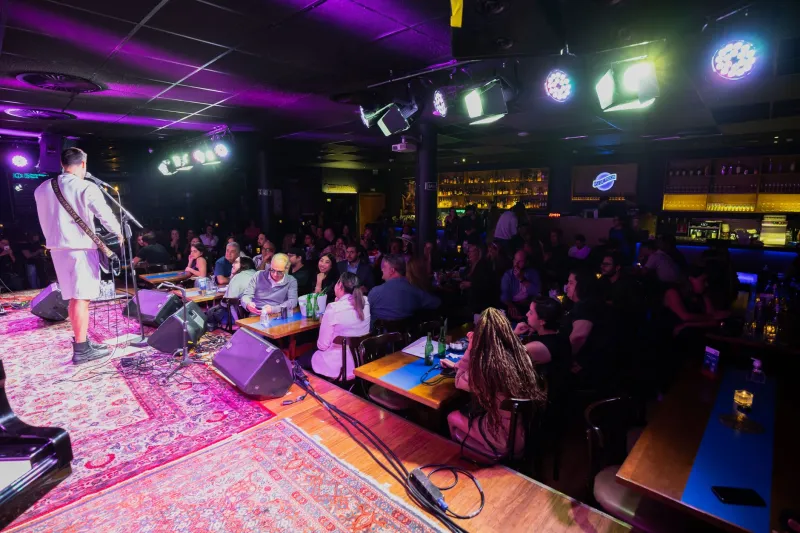
Midnight Plates and the Two-Beat Rule: How BBQ Shacks Keep Touring Funk Alive
There's a moment every touring band knows. The amps are off, the sweat is drying on the stage, and somebody — usually the bass player — says the word: food.
For a funk outfit hauling gear across America, that word carries weight. A three-hour set burns through a body like a furnace through kindling. And what happens in the hour after the last chord often determines whether tomorrow night's show sings or slumps. This is the story of the kitchens, pits, and juke joint back rooms that keep the grease — the literal kind and the musical kind — flowing.
The Unwritten Contract
Ask around enough roadhouses and you'll hear the same thing phrased a dozen different ways: the band plays, the town feeds. Nobody signed anything. Nobody has to.
Miss Pearline, who's been running the smoker behind a roadside joint outside Macon for thirty-one years, put it to us straight while trimming a brisket at nine in the morning. "Musicians eat late and they eat honest," she said. "They don't want no fancy plate. They want to know somebody cooked it that day, with their hands, and they want seconds before they ask."
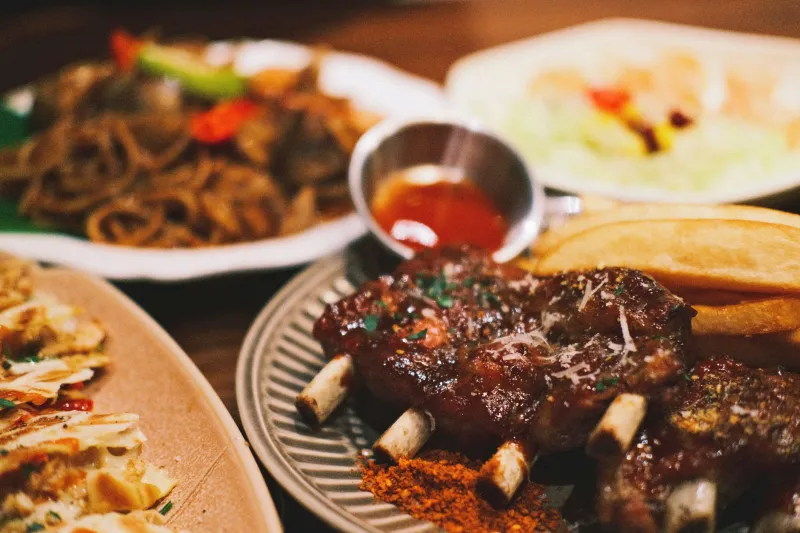
That's the deal, more or less. The band brings the crowd, the crowd brings the bar tabs, and somewhere between load-out and last call, a plate appears. Cornbread. Greens cooked with a ham hock that's seen better decades. Something off the pit, chopped fine and sauced light.
What a Band Eats Before the Burn
There's a science here, even if nobody wrote it down. Ask five funk bands what they eat before a long set and you'll get a consensus that would make a nutritionist weep — but there's logic buried in the tradition.
The rule of thumb, passed around van to van like a bootleg tape: nothing heavy in the last ninety minutes, nothing greasy on the hands, nothing that fights back mid-song. That means the big plate happens after, not before. A pre-show meal runs toward rice, beans, slow-burn carbs. The post-show feast is where the ribs and fried catfish come home to roost.
One horn player we know calls it the "two-beat rule" — if the dish sits in you heavier than a two-beat drop, it doesn't touch your lips before doors. Drummers, unsurprisingly, are the strictest enforcers. A trombonist is the first to break it.
The Cooks Who Keep the Lights On
Here's what surprised us: the pitmasters and soul food cooks who feed touring bands aren't starstruck and they aren't casual about it. They're part of the infrastructure, as essential to the circuit as a good soundman.
Earl, who runs a smokehouse on the east side of Houston that doesn't bother with a sign, told us he can read a band from their order. "Rhythm section wants the heavy stuff. Brisket, mac, the works. Horn players pick at the bird. Singer eats last, eats light, and drinks sweet tea like it's going out of style." Thirty years behind the counter taught him that. He's never been wrong, he says, except once, and the keyboardist turned out to be filling in.
In Memphis, a woman named Dottie runs a plate lunch counter that stays open past two on weekends — not for the bar crowd, she insists, but for the bands. "They come in with that look," she told us. "Ears still ringing, hands still shaking. You put a hot plate in front of that, they turn back into people."
Turn back into people. That's the whole function. The stage takes something out of you; the kitchen gives it back.
Why It Matters More Than a Good Review
A funk band lives or dies on repetition — night after night, city after city, the same songs played harder. The ritual of the shared meal is the glue. It's where the set gets critiqued honestly, where the van problems get solved, where the new tune gets hummed over cornbread before it's ever rehearsed.
Some of the best grooves we've ever heard were born at a corner table with a plate of ribs between eight people and one working fork. Nobody claims the idea afterward. The plate gets credit.
So the next time you catch a band and wonder how they keep the pocket that tight on night fourteen of a run, remember: somewhere across town, a smoker's been going since dawn, and a cook who'll never be on the poster made it all possible.
Tip the kitchen. Buy the pitmaster a drink. The grease has to come from somewhere.