The Mic Is a Rhythm Instrument: A Funk Frontman's Field Guide to Banter That Breathes
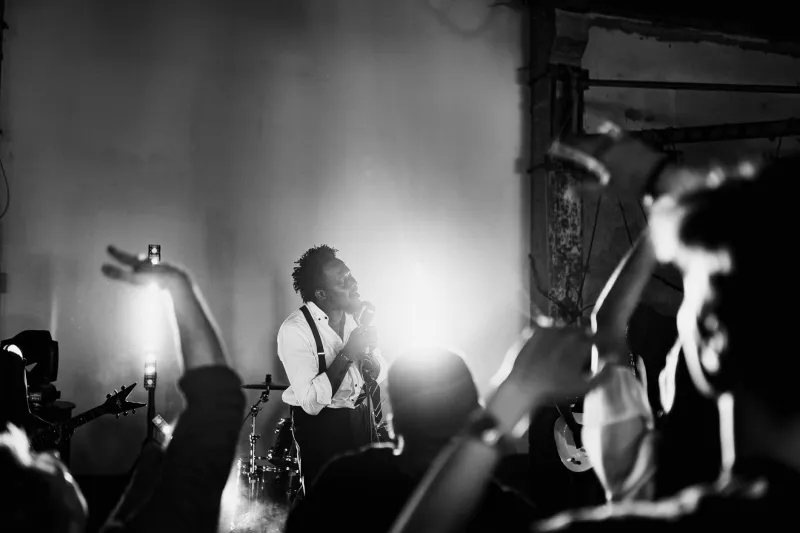
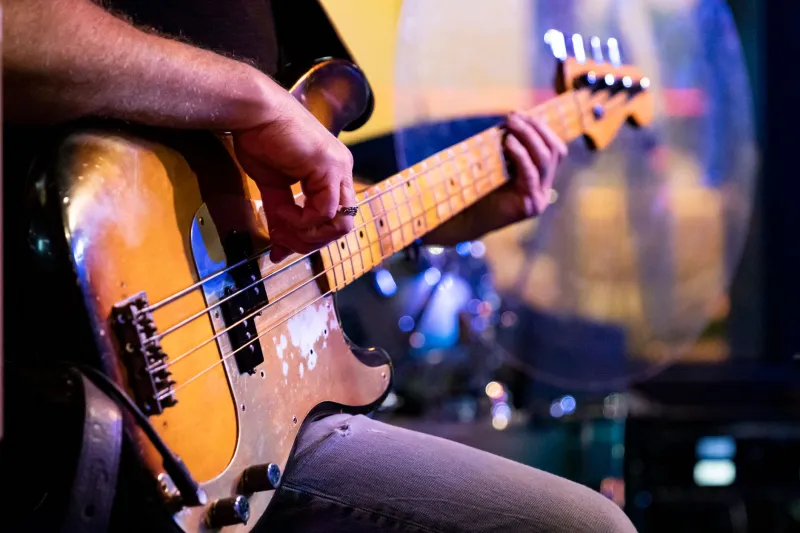
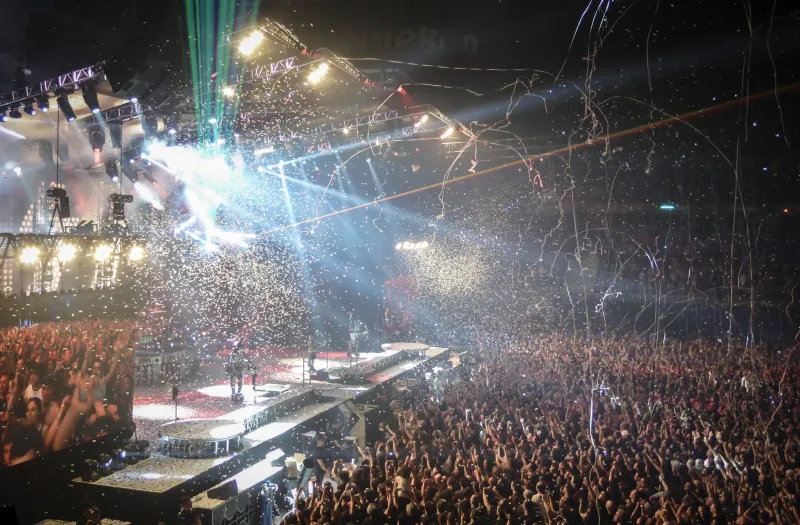
The house lights are still down, the last chord of the opener is ringing off the back wall, and the room is holding its breath. This is the moment where a funk band either tightens its grip or lets the night go soft. The bass player is already walking a line. The drummer is feathering the hi-hat. And the frontman has about four seconds to decide whether to talk, shout, or say nothing at all.
That decision is the whole art of stage banter. Not the canned stories about the bus breaking down. Not the TED Talk about how this next song is about the human condition. Real funk patter is a rhythm instrument. It has a tempo, a duration, and a job: keep the room locked in until the next downbeat hits.
Dead Air Is Not the Enemy. Dead Weight Is.
A lot of bands panic at silence. They fill it with a rambling introduction, a half-funny anecdote, a long thank-you list that starts with the promoter and ends with somebody's cousin. By the time the tune kicks off, the crowd has checked out and the groove has to start from zero.
The best frontmen know that silence can be tension. A beat of quiet after a hot number lets the sweat settle. It gives the room a second to holler. It makes the next kick drum feel like a door opening. The problem isn't dead air. The problem is dead weight: words that don't move, jokes that don't land, and stories that outstay their welcome.
Watch a seasoned funk band in a US club and you'll see the pattern. The singer leans into the mic for a line or two, maybe points at the bar, maybe gives the drummer a nod. Then the count-off comes fast. The banter never becomes its own set piece. It's a bridge, not a destination.
Read the Room Like a Chart
A room in Jersey tells you what it wants before the first chorus. So does a honky-tonk in Austin, a basement spot in Chicago's South Side, or a converted theater in Portland. The best frontmen read those signals and tune the patter accordingly. They don't bring the same script to every city.
In a packed dance floor, keep it physical. A quick call of "somebody help me out" works better than a monologue. In a seated room, you can stretch a little, tell a story about the diner down the street, ask who was at the show last time. In a half-full Tuesday night club, you acknowledge the diehards and make them feel like co-conspirators. "We know it's a school night. We appreciate you." That line has saved more encores than any speech about artistic integrity.
Local tuning is not about name-dropping the mayor. It's about naming the room. The bartender who kept the waters coming. The sound engineer who fought the feedback. The load-in crew that hauled the B-3 up a flight of stairs. When a frontman shouts those people out, the crowd hears it. They know the band sees the same room they do.
Short, Warm, Local: The Three-Second Rule
There is no official rulebook, but there is a reliable test. If the banter takes longer than a stop-time break in the song, it's probably too long. The mic should not become a podium. Funk crowds are generous, but they are also restless. They came to move, not to listen to a keynote.
A good rule of thumb: three seconds of setup, five seconds of payoff, then back to the groove. "This next one goes out to the bartender who just made twelve rum and cokes in four minutes. We see you, Renee." That's it. The crowd cheers. The band hits. The night keeps rolling.
Warmth matters more than cleverness. The best lines sound like something you'd hear at last call in a neighborhood bar: familiar, a little ragged, genuinely glad you're there. Not polished. Not scripted. Just present.
The Shout-Out Economy
A funk show is a room full of labor. Somebody booked the date. Somebody drove the van. Somebody sold the shirts. Somebody cleaned the bathrooms before doors opened. Frontmen who understand this turn the microphone into a small economy of thanks. They name the merch person. They name the opener. They name the door guy who kept the line moving.
That's not just politeness. It's rhythm. A shout-out creates a call-and-response with the room before the song even starts. The crowd hollers back. The band feels it. The next tune gets an extra push. And the people who work the room remember the band that treated them like part of the show, not part of the furniture.
Call-and-Response Without the Cliché
Yes, "say hey" works. It has worked for decades. But the best funk bands find ways to make the crowd answer with something more than a reflex. A horn player stabs a two-note figure. The frontman points the mic at the room. The crowd shouts the riff back. A bass player drops a low, greasy line and the singer asks, "Can you feel that?" The room answers with its feet.
Call-and-response doesn't have to be verbal. It can be a hand raised, a clap pattern, a chorus sung by people who didn't know they knew the words. The frontman's job is to hand the room a cue, not a lecture.
When to Say Nothing at All
Some of the greasiest moments in funk history happen with the mic off. The band locks into a vamp. The singer steps back, lets the horn section take a chorus, and the crowd leans in. No introduction. No story. Just the pocket, breathing on its own.
Knowing when to shut up is a skill. If the groove is deep enough, the room doesn't need an explanation. A nod, a point, a count-off. That's the whole speech. The music does the talking.
The Last-Call Test
Here's the simplest way to judge stage banter: does it sound like last call or a lecture? Last call is warm, direct, and a little loose. It's the voice that says, "We're glad you're here, we've got one more for you, let's make it count." A TED Talk is rehearsed, tidy, and more interested in the speaker than the room.
Funk doesn't need a keynote. It needs a frontman who treats the microphone like a tambourine: something to shake when the moment calls for it, then set down before it gets in the way. Keep it short. Keep it local. Keep it warm. And never let the banter outlast the groove.