Pews, Pockets, and Passing Chords: A Listening Guide to the Church Inside Funk
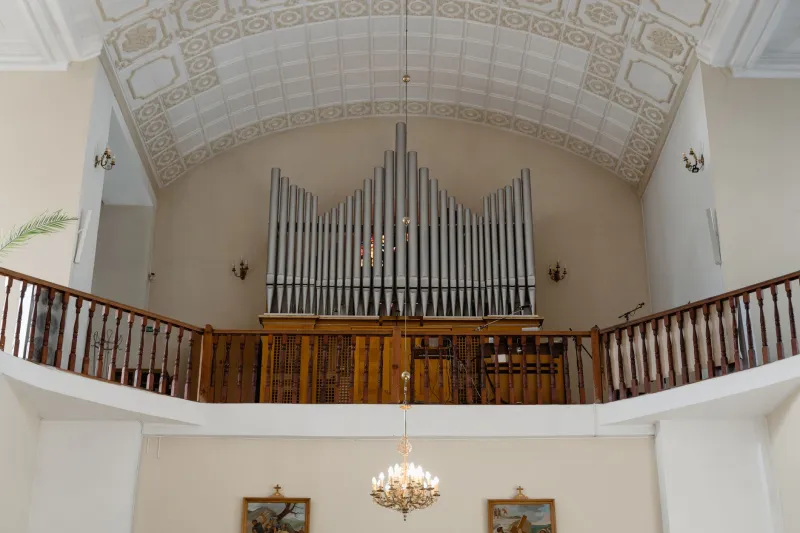
There's a moment in a lot of great funk records where the floor seems to tilt. The bass is already locked, the horns have already stabbed, and then something underneath the whole thing lifts — like the ceiling got raised six inches and nobody told the drummer. If you grew up in church, you already know what that feeling is. It's a chord. It's a choir answering back. It's the Hammond swelling under the last line of a prayer.
American funk has been borrowing from the sanctuary since the first time somebody rolled a B-3 into a nightclub and figured out the Leslie sounded better with a beer on it. The trick is that most of the borrowing is buried under the groove, uncredited, name-dropped only in liner notes and bass-player arguments. So this is a listening guide. Put on headphones, note the chord, trace it back to the pews.
The Amen Cadence, Wearing a Leather Jacket
Start with the oldest move in the book: the plagal cadence, IV to I. In church it's the "Amen" at the end of a hymn — the soft landing that resolves without really resolving, because the congregation knows it's just going back to the top for one more verse.
Funk took that landing and refused to let it land. Listen to Al Green's "Love and Happiness" — recorded at Royal Studios in Memphis with Willie Mitchell behind the glass. The organ sits on a fat IV chord and just holds it, and the melody lands on the sixth instead of the root, so the whole intro sounds unresolved and wide open, like a door that won't shut. That's the Amen cadence with the brakes cut. Al grew up singing in his father's church in Grand Rapids and later at Rev. C.L. Franklin's New Bethel in Detroit, and you can hear every one of those Sunday mornings in the way he refuses to close the phrase.
Same move, faster tempo: the Staple Singers' "I'll Take You There" is essentially a two-chord vamp — I and IV — with Pops Staples' tremolo guitar doing the work the choir would have done. Mavis doesn't resolve. She circles. That's not pop songwriting; that's a devotional that got a bassline.
Passing Chords and the Devil's Business (in a Good Way)
Church musicians love a turnaround, and the church turnaround is the source of about half the spicy chords in funk. A vi–II7–V7 walk, a flat-VII dropped in for grit, a #Idim7 sliding between the I and the ii — these are the little ankle-breaks that let a song cycle back to the top without ever really stopping.
Curtis Mayfield's "Move On Up" is a master class. The horns play a fanfare that sounds like a choir's first inhale, and then the tune modulates — up a whole step — exactly like a choir director taking the last verse of "Oh Happy Day" to a key nobody rehearsed. That's the church lift, and it's why the song still sounds like it's climbing a staircase after seven minutes.
Donny Hathaway's "The Ghetto" does it slower. The organ is barely doing anything — one sustained chord, a swell, a walk down — and yet the whole track feels like a sermon building to a shout. He was a church kid from Chicago, and he never forgot it.
Hammond Swell: Crying Without Words
If the chords are the theology, the Hammond B-3 is the preacher. Pull the drawbars out to something like 888000000, kick the Leslie to fast, and the thing starts to breathe. The swell pedal is the part that matters — that's the organ's version of a singer catching breath before the last line of a testimony.
Listen to the organ under Aretha Franklin's "Respect." It barely moves, but it's there, holding the floor while she turns "sock it to me" into a congregation-wide instruction. Listen to the pad on Earth, Wind & Fire's "That's the Way of the World" — Maurice White grew up in the Church of God in Christ in Chicago, and the voicings he chose for that group were choir voicings, close and stacked and warm.
Call, Answer, and the Shout
The call-and-response thing is where funk's debt is most obvious and least hidden. James Brown didn't invent it; he just moved it from the choir stand to the Apollo. "Soul Power" and "Get Up, Get Into It, Get Involved" are literally congregation prompts — one phrase from the leader, one phrase back from the room, repeated until the room is hoarse.
But the purest example might be Sam & Dave's "Hold On, I'm Comin'." Sam Moore's falsetto testifying over Dave Prater's gritty answers is a church duet with a Stax rhythm section behind it. Same DNA in the Isley Brothers' "Shout" — which is, quite literally, a shout, the ring-shout tradition that predates rock and roll by a century. Parliament's "Mothership Connection (Star Child)" quotes "Swing Down, Sweet Chariot" straight-up, because George Clinton understood that if you're going to build a UFO church, you should use the actual hymnal.
Five Records to Play Tonight, In Order
- The Staple Singers — "I'll Take You There" (1972). The baseline. Two chords, one vamp, infinite lift.
- Al Green — "Love and Happiness" (1972). The Amen cadence at half speed, with a Memphis pocket under it.
- Donny Hathaway — "The Ghetto" (1970). Organ-as-preacher. Listen to how little he actually plays.
- Curtis Mayfield — "Move On Up" (1970). The modulation. The horns. The staircase.
- Sam & Dave — "Hold On, I'm Comin'" (1966). The call-and-response template every funk band since has tried to swipe.
How to Borrow It Without Preaching
If you play in a working funk band, you already know the temptation: drop in a gospel chord, get a little applause, do it again next tune, and by the third song the set feels like a wedding reception with a Hammond. Don't.
The rule is tension, not revival. Use the church stuff the way the records did — as a structural device, not a costume. A plagal IV–I tag is perfect for the last thirty seconds of a slow burner, not for the whole bridge. A single held IV chord before a chorus will do more work than a whole choir patch. Have the horns voice what the choir would sing — close, in thirds and sixths, not blaring — and let the organ fill the holes rather than lead.
And keep the response simple. One word, two syllables, repeated. "Get up." "Come on." "Thank you." The congregation doesn't need a libretto; it needs a cue.
One lift per set. Place it on the tune that's already earned it. Then get off the stage and let the room keep humming the chord all the way out to the parking lot — which, if you've done it right, is exactly what a good church service does too.