The Nod Before the Thunder: Decoding a Funk Count-In

The house lights drop. Somebody yells for the horn line. The drummer lifts both sticks, and for a half-second the whole room hangs on what happens next. That half-second is the count-off, and it is the most important music the band plays all night.
On paper, a count-off is simple: four beats and go. In a funk room, it is a negotiation between adrenaline, tempo, and the room’s own appetite. Get it right and the first downbeat lands like a back door slamming in a juke joint. Get it wrong and the band spends the next three minutes trying to climb back onto a horse that already left the barn.
The Count Is a Contract, Not a Click
Drummers who live on the road will tell you the count-off is not really about time. It is about agreement. The drummer is not just marking beats; they are announcing the feel, the subdivision, the dynamic, and the amount of grease allowed in the first bar. A count that sounds like a metronome is a count that forgot to invite the bass player.
The tempo traps start early. The room is louder than the last one. The crowd is already moving. The frontman’s banter ran long and the drummer is trying to rescue the moment. So the count comes out fast, eager, and slightly nervous. Front-of-house vets hear it in the first hi-hat pattern: the groove is running a few beats per minute hot, the horns are chasing, and the chorus arrives like a guy who missed his exit.
A good bandleader knows the count-off is where you lie to yourself in public. You count in the tempo you can actually play, not the tempo you wish you could play. You count in the feel the room needs, not the feel the rehearsal room had on a Tuesday afternoon. And if you are smart, you count in a subdivision that gives everybody a job: the drummer locks the pocket, the bassist finds the root, the guitarist chokes the chord, and the horn players take one last breath before the blast.
Four Beats, Three Lies, and a Save
Most count-off disasters are not dramatic. They are small. The drummer clicks the sticks too high and the band reads it as a fast tempo. The bassist nods on the wrong beat. The frontman turns around to shout something encouraging and accidentally becomes the fifth click. The organ player comes in a half-beat late because the Leslie was still spinning up. Nobody dies. But the pocket gets a little slippery, and everybody knows it.
The prayer part is the recovery. A great funk band can save a bad count-off with eye contact and a hard stare at the snare. The drummer might drop a quick ghost note, the bassist might walk the tempo back, the guitarist might lay out for two bars and let the drums reassert the truth. The audience rarely notices the rescue. They just feel the groove settle in like a car finding its lane after a bumpy merge.
This is why so many players prefer a count-off that is felt more than heard. A stick click, a hi-hat chick, a left-foot stomp, a grunt that sounds like a bad transmission — these are not parlor tricks. They are cues. They tell the band where the floor is. The best ones carry a little menace and a little humor, because funk is serious business that should never sound too serious.
Cues You Can See From the Cheap Seats
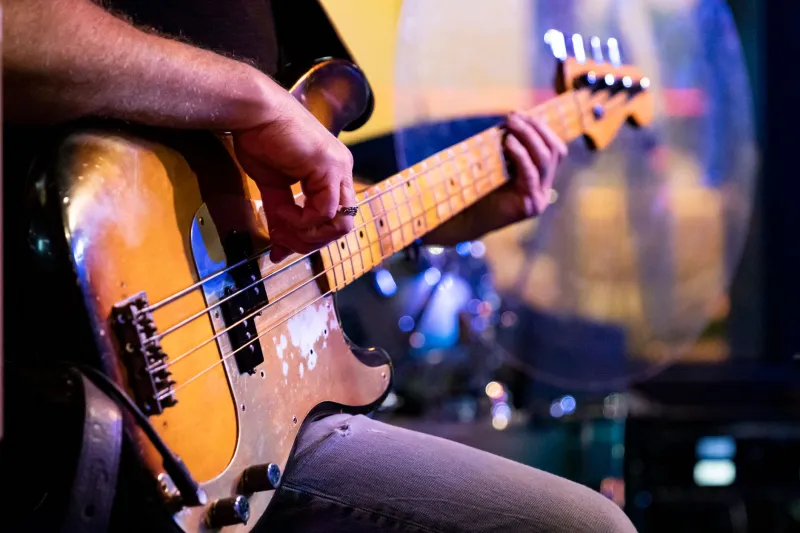
From the floor, a great count-off looks like a tiny conspiracy. Watch the drummer’s wrists, not just the sticks. A confident count-off has weight in the forearm and a snap in the wrist; it is already playing the groove before the groove starts. Watch the bassist’s chin. If the bassist and drummer lock eyes before the downbeat, the pocket has a better chance of arriving on time.
Watch the horn players. A horn section that takes a visible breath together is a horn section that knows where the first hit lives. Watch the frontman’s hands. If the singer is still talking when the drummer counts, the band is either very good or about to be very lost. And listen for the first bar: does it land together, or does it stagger in like a bar band loading equipment?
What the Board Hears
Front-of-house engineers get an ugly, honest view of the count-off. They hear the stick clicks through the drum mics. They hear the bassist’s strings ringing before the first note. They hear the singer’s monitor mix crackle when the downbeat hits. A good engineer can tell in four clicks whether the night is going to be a glide or a grind.
The best count-offs, they say, are the ones that do not call attention to themselves. The drummer counts, the band answers, and the room starts moving. No speech. No grand entrance. Just a quick, dirty agreement that the next three minutes belong to the groove. That is the secret life of the funk count-off: it is not a countdown. It is a handshake, a threat, and a prayer, all delivered before the first note.
When you are in the crowd and the drummer lifts those sticks, lean in a little. You are about to watch the band decide what kind of night it is going to be. If the count feels like a nod and the first bar hits like a slab of ribs, you already know. The grease is on.