Sweat on the Ceiling: A Field Guide to America's Greasiest Funk Rooms
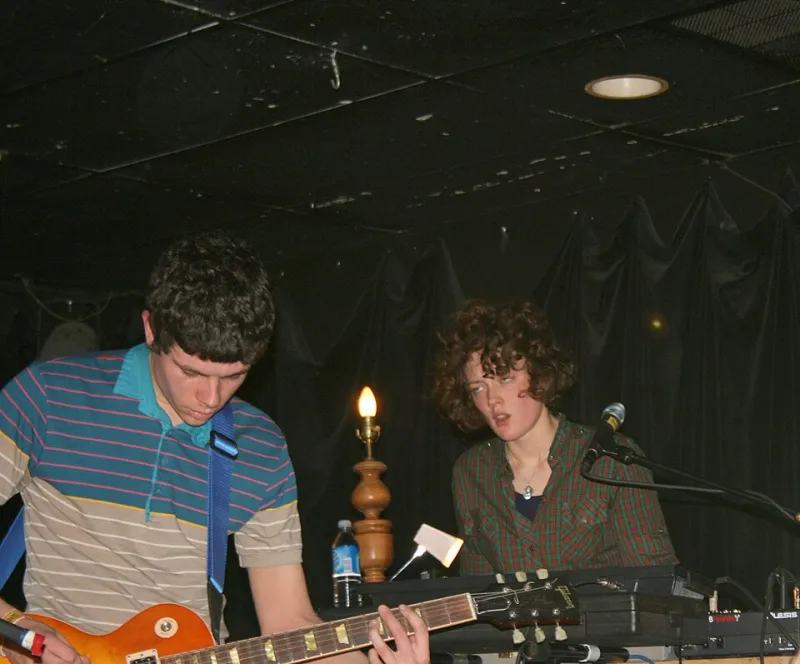
Photo: Julio Enriquez from Denver,CO, USA, CC BY 2.0, via Wikimedia Commons
Every touring band has a mental map of the country that looks nothing like a road atlas. Ours is marked not by cities but by rooms — the places where the floor gives back what you put in, the P.A. has more character than some people we know, and the ceiling has absorbed so many decades of sweat it should be paying rent.
These are the rooms we'd play for gas money. Hell, some of them we basically have. Here are seven of America's greasiest funk rooms, with field notes on the crowd, the sound, and the post-gig meal that makes the load-out worth it.
1. The Juke Joint Outside Clarksdale, Mississippi
The room: Unmarked door, gravel lot, a tin roof that turns a thunderstorm into a percussion section. Capacity is whatever the fire marshal isn't around to count. The floor is sprung — not by design, but by eighty years of dancing.
The crowd: Three generations deep on a good Saturday. Grandmothers who will absolutely school you on the two-step. Local blues and soul players sitting in uninvited and always welcome.
The sound: Old ceiling fans, even older reverb. The room itself is the best compressor in the building.
Eat after: Late-night fried catfish and Delta tamales from a gas station that's somehow better than most restaurants. Trust us on this.
2. A Converted Warehouse in Chicago's South Side
The room: No sign, no stage to speak of — just a raised concrete lip where the band sets up and prays nobody stacks chairs on it. Exposed beams, zero insulation, and a sound system pieced together from three defunct clubs.
The crowd: Dancers. Serious dancers. Chicago steppers who treat the pocket like a legal contract and will stare you down if you rush the one.
The sound: Raw and honest. If your bass player's time is bad, you will know within four bars, because two hundred people will know it too.
Eat after: A Polish sausage from a Maxwell Street-adjacent cart, grilled onions mandatory, at 2:45 a.m. It fixes things.
3. The Roadhouse on Highway 61, Memphis Outskirts
The room: Neon beer signs, a pool table nobody uses on band nights, and a dance floor roughly the size of a two-car garage. The stage is carpeted. Green shag carpet. We don't make the rules.
The crowd: Bikers, church folks, and off-duty bar staff from three counties, all sharing the same groove. The tipping is righteous.
The sound: The P.A. has a story for every decade since 1975, and the horn mix proves it. Lean into the room mics, not the monitors.
Eat after: BBQ nachos from the smoke shack next door, open until the smoke Shack's owner feels like closing. Which is never, bless him.
4. A Third-Line-Adjacent Bar in New Orleans' Bywater
The room: Peeling pastel paint, a courtyard with strung lights, and a floor that's been mopped with more history than chemistry. Brass players wander in mid-set like it's a bus stop.
The crowd: Locals who dance like gravity is optional and tourists clinging to the railings, learning. By the second set, you can't tell them apart.
The sound: Second-line loose, always a half-beat behind and somehow perfectly on time. New Orleans time is its own key signature.
Eat after: A po'boy, dressed, from the corner spot that's been frying bread since before your parents met. Get it to go. Eat it walking. That's the ritual.
5. The Bowling Alley Bar in Detroit's East Side
The room: Yes, a bowling alley. Eight lanes, one bar, and a band corner near the shoe rental counter. The acoustics are a mystery science cannot explain — somehow everything sounds huge.
The crowd: League bowlers who don't stop bowling during your set and still end up on the dance floor by song three. Unpretentious in a way that recalibrates your whole career.
The sound: Surprisingly fat low end. We suspect the lane machinery is sympathetic.
Eat after: You're already there. The kitchen does an absolutely unhinged olive burger. Order two. You've earned it.
6. A Sunday Afternoon Social Club in Oakland
The room: A neighborhood social hall with folding chairs pushed to the walls and a linoleum floor worn down to a shine. Daytime gigs, all ages, babies asleep in playpens next to the speakers like it's normal. Because it is.
The crowd: Families. The elders sit, the middle generation dances, the kids air-drum. Everyone knows the words to songs we haven't written yet.
The sound: Clean and close. No P.A. heroics needed — the room listens.
Eat after: A plate from the fundraising BBQ in the parking lot. The ribs fund the next show. The circle of life, funk edition.
7. The Riverfront Dive in East St. Louis
The room: Low ceiling, brick walls, a stage so close to the crowd that the front row has handed us lyrics sheets on more than one occasion. The building hums. So do we.
The crowd: The most loyal dance floor in America. They show up in a monsoon. They show up on holidays. They show up.
The sound: Warm, dark, and forgiving — the room loves a horn section like a grandmother loves an excuse to cook.
Eat after: Toasted ravioli and a cold one from the spot across the river. Don't ask questions. Just eat.
Why These Rooms Matter
Every one of these places is one rent hike, one licensing dispute, or one bad winter from disappearing. And when they go, they don't just take a stage with them — they take the only classrooms where funk actually gets taught. You can't learn the pocket in a bedroom, and you can't learn it in a corporate venue with a decibel limiter and a 20-minute changeover either.
So here's our ask: when one of these rooms is within driving distance of you, go. Buy the drink, tip the band, eat the food, and sweat on their ceiling. That ceiling's earned it.