Two Hundred Horns Don’t Lie: The HBCU Halftime Pocket Lesson Your Funk Band Needs
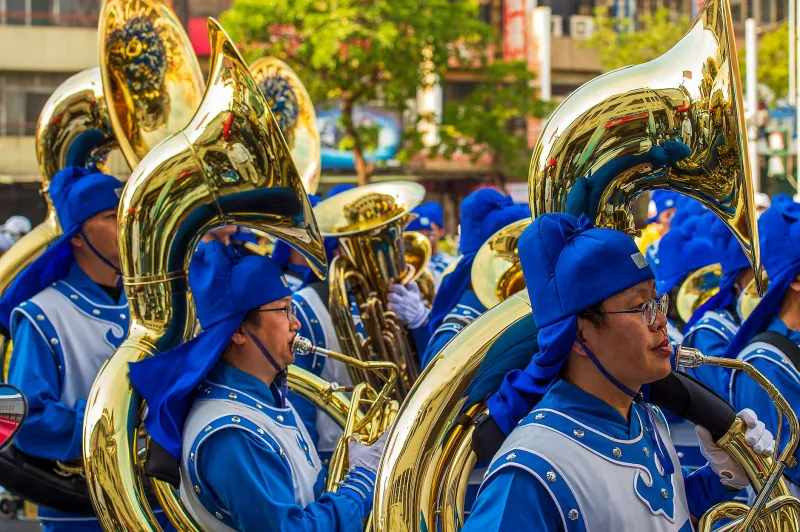
Halftime is not a break. In the HBCU marching band tradition, it is the main event with a scoreboard attached. A couple hundred horns and drums spill onto the field, the drumline clicks off a tempo, and suddenly the pocket is not a private thing you chase in a rehearsal room. It is a public act, built to survive wind, distance, bad stadium speakers, and a crowd that refuses to sit still.
That is why HBCU halftime shows are a funk masterclass hiding in plain sight. The music is not funk in the jukebox sense, but the rhythmic DNA is right there: short riffs, hard cuts, basslines that move like a diesel engine, and horn sections that hit like one fist. For a gigging funk band, the field is a laboratory. The lessons are brutal, practical, and free.
The Field Is a Bandstand With Worse Acoustics
Ask arrangers and band directors who build these halftime books and they tend to talk less about sheer volume than architecture. The chart has to communicate across a football field. That means riffs are short, transitions are obvious, and the drumline owns the clock. One longtime arranger described the halftime book as 'a setlist with a drill chart'—every hit has a job, every repeat earns its place, and every section knows exactly where the floor is.
That is not far from what a funk band needs in a club. A small room can hide a lot of mush. A stadium cannot. If a horn line is not together, the field exposes it. If the bass is not locked with the kick, the whole thing wobbles. If the drumline rushes, two hundred people rush with it. The HBCU model forces clarity because there is nowhere to hide.
Drumline Cadences: The Original Loop Pedal
You do not need to know the name of every cadence to hear the grammar. There is the snare pickup that says 'here we go.' There is the stop-time breakdown where the drumline drops to taps and the sousaphones growl underneath. There is the double-time peel-off that turns a march into a sprint. And there is the tag—the little four-bar stinger that lets the band put an exclamation point on the whole thing.
Cadences work like loop pedals with legs. They repeat a cell until the crowd feels it, then they mutate it. A roll becomes a fill. A backbeat gets displaced. The bass drum and sousaphone lock on a phrase while the snare line answers with something sharper. That call-and-response is funk's native language. James Brown knew it. The Meters knew it. The drumline has been teaching it on asphalt for generations.
The lesson for a funk band is not to write marching cadences. It is to steal the discipline of the cadence: build a groove in clear cells, repeat it long enough to hypnotize, then change one thing at a time. Too many bands add a new idea every four bars and wonder why the room never settles. The drumline knows that repetition is not laziness. Repetition is the invitation.
Sousaphone Is the Bass Amp You Can March
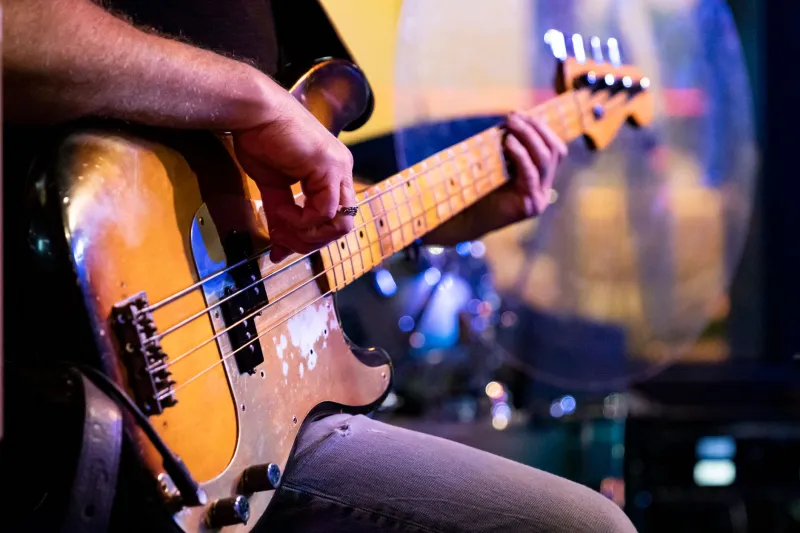
A marching sousaphone is a bass instrument with a lung attached. It has to project, articulate, and carry a line while the player is walking, turning, and breathing around a piece of brass the size of a small water heater. So sousaphone lines are built for function: strong downbeats, percussive attacks, four-bar cells, and micro-variations that keep the line alive without cluttering it.
That is a better bass lesson than most YouTube tutorials. The sousaphone player cannot rely on sustain alone. The note has to speak. The rhythm has to be felt in the body. The line has to leave room for the drums and horns while still being the floor everything stands on. Funk bassists talk about 'the one' and 'the pocket,' but the sousaphone tradition makes it physical: if the line does not move the feet, it is not doing its job.
Gigging bands can translate that directly. Write basslines that are rhythmic statements, not melodic fog. Let the kick and bass agree on the important hits. Use fills as punctuation, not decoration. And remember that a simple line played with authority beats a busy line played with doubt.
Horn Sections That Hit Like One Fist
A massed HBCU horn section is not just loud. It is arranged. The trumpets, mellophones, trombones, and saxes are stacked in a way that makes the section sound bigger than the sum of its parts. Dynamics are terraced: a verse might be a tight bark, the chorus a full shout, the breakdown a nasty whisper. Cutoffs are clean. Entrances are unanimous. Vibrato is seasoning, not a lifestyle.
That precision is the part club funk bands underestimate. A horn section can have great players and still sound like a committee. The HBCU model insists on section identity: breathe together, articulate together, move together. The choreography is not a gimmick. It is a visual extension of the rhythm. When the horns dip on the backbeat and pop on the downbeat, the crowd sees the pocket before it hears it.
For a funk band, that means rehearsing the section as a section, not just as individuals who happen to stand near each other. Put down the phones. Learn the same articulation. Decide where the vibrato goes and where it does not. Practice the cutoffs. Then practice them again. The goal is not military stiffness. The goal is a section that can move as one and still sound human.
What Gigging Funk Bands Should Steal
First, steal the transition discipline. HBCU shows are built on segues: cadence into song, song into chant, chant into drill. Funk bands often treat transitions as afterthoughts. They should not. A hard arrangement of three songs that flow like one suite will beat a loose set of ten songs that stop and start.
Second, steal the short riff. The halftime book cannot afford a meandering horn line. It needs hooks that land in four bars or less. Funk lives on hooks too. If the audience cannot hum it or move to it by the second repeat, tighten it.
Third, steal the dynamic map. A show that is loud all the time is not loud. The HBCU model uses quiet passages to make the shout sections feel enormous. Funk bands can do the same: drop the horns, let the bass and drums talk, then bring the whole thing back like a curtain falling.
Fourth, steal the crowd awareness. A drum major is reading the field, the band, and the audience at once. A funk frontperson should do the same. Know when the room is with you. Know when to stretch. Know when to cut. The pocket is not just a tempo—it is a conversation.
What Not to Steal
Do not steal the stiffness. A halftime show is built for a stadium; a club is built for a room. Marching precision is a means to an end, not the end itself. Funk needs grease, and grease needs a little slack. The trick is to be tight enough to hit hard and loose enough to feel alive.
Do not steal the volume-as-arrangement habit. Two hundred horns can get loud, but the arrangers still write parts. A funk band with four horns cannot just blast. It has to arrange, edit, and leave space.
And do not steal the endless cadence. The drumline can repeat a groove until the crowd loses its mind because the crowd is part of the show. A club band has to read the room. Repetition is a tool, not a prison sentence.
The HBCU halftime tradition is a reminder that pocket is not a secret. It is a practice. It is two hundred people agreeing on where the beat lives, then making that agreement visible. For any funk band trying to get tighter, bigger, and more commanding, the field is open. Watch the drumline. Watch the sousaphone. Watch the horns. Then take that lesson back to the club and slap it.